The Best Hiking Boots for Mount Kilimanjaro
Sarah K.
Gear & Logistics Specialist
What to look for in Kilimanjaro footwear. Learn about stiffness, ankle support, waterproofing, and how to prevent summit-ending blisters.
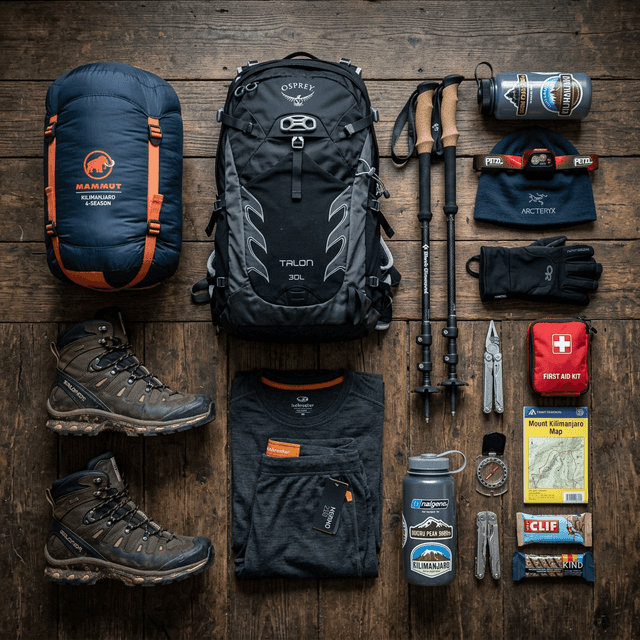
Your boots are the most critical piece of equipment you will bring. A bad pair of boots can end your climb on day one.
What Makes a Great Kilimanjaro Boot?
Kilimanjaro involves walking over 60km across varying terrain—from slippery rainforest mud to volcanic scree and sharp rocks. You need a boot that provides three things: **Ankle Stability**, **Waterproofing**, and **Traction**.
Key Features
- Gore-Tex Lining: Essential for the wet rainforest and summit snow.
- High Ankle Support: To prevent sprains on uneven volcanic rocks.
- Vibram Soles: For maximum grip on the steep Barranco Wall.
- Lacing System: Locked hooks to keep your foot secure during descent.
Pro Tip: Sizing
Buy your boots one half-size or one full size larger than your normal shoes.
Why? Your feet will swell at altitude, and you need extra room in the "toe box" so your toes don't hit the front of the boot during the 5-hour descent from Uhuru Peak. This is how climbers lose toenails!
Top 3 Recommended Boots
1. Salomon Quest 4D GTX
The gold standard for Kilimanjaro. It offers the support of a traditional leather boot with the weight of a trail runner.
2. Lowa Renegade GTX
Perfect for those with wider feet. Extremely comfortable out of the box and very durable.
3. La Sportiva Trango Tech
A more 'mountaineering' oriented boot. Best for those doing technical routes like the Arrow Glacier.
The Most Important Rule: Break Them In!
Never, ever wear brand new boots on Day 1. You should walk at least 50km to 80km in your boots before arriving in Tanzania. Wear them on your training hikes, at the gym, and even around the house. Your feet need to mold to the boot to avoid blisters.
See the full gear list in our Ultimate Packing List.