How Much Does it Really Cost to Climb Mount Kilimanjaro?
Sarah K.
Gear & Logistics Specialist
A detailed look at permits, guides, food, and gear. Break down the $2,000 to $6,000 price tags seen across different expedition companies.
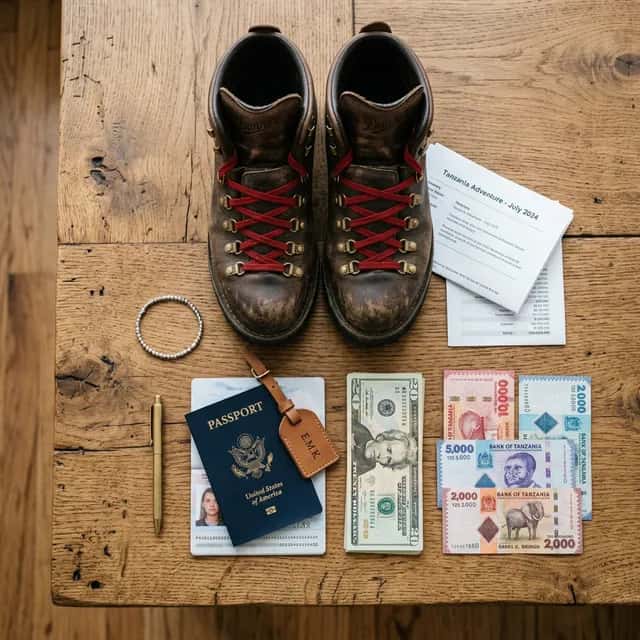
"How much does it really cost to climb Kilimanjaro?" It is the most common question we receive. The short answer is: between $2,500 and $6,000 USD. But understanding exactly where that money goes is the key to ensuring you book a safe, ethical, and successful expedition.
The True Cost Breakdown
Climbing Mount Kilimanjaro is not a cheap endeavor. Unlike hiking in the Alps or the Rockies, the Tanzanian government heavily regulates entry to the mountain to preserve its fragile ecosystem and generate national revenue. Every climber must be accompanied by a licensed guide, and a full support crew of cooks and porters is mandatory.
When you pay an outfitter, your money is distributed across several non-negotiable fixed costs, variable logistics costs, and finally, the company's profit margin. Here is the mathematical reality of a standard 7-day climb.
Estimated 7-Day Climb Expenses (Per Person)
Park Fees & Taxes$800 - $1,100
Tanzania National Parks (TANAPA) charges daily conservation fees, camping/hut fees, rescue fees, and an 18% VAT on all of the above. This money goes directly to the government and is 100% fixed. Longer routes like the 9-Day Northern Circuit cost significantly more in park fees.
Staff Wages$600 - $900
A typical climber requires 1 lead guide, 1 assistant guide, 1 cook, and 3-4 porters. Paying fair, living wages to this crew of 6+ people for a week of grueling labor is the largest variable cost. Ethical operators never compromise here.
Logistics & Equipment$400 - $700
This covers transportation to and from the gate, high-altitude 4-season tents, portable private toilets, thick sleeping mats, pulse oximeters, emergency oxygen tanks, and three hot, highly nutritious meals per day on the mountain.
The Danger of "Cheap" Tours ()
If park fees alone cost almost $1,000 for a 7-day climb, how is it possible that some companies advertise entire expeditions for $1,400 or $1,500? The math simply does not work unless the operator is severely cutting corners.
Budget operators survive by doing three things:
- Exploiting Porters: They pay their porters below the minimum wage, or sometimes nothing at all, forcing them to rely entirely on your tips to feed their families. They also give them only one meal a day and lack proper sleeping tents.
- Compromising Safety: Budget guides often lack Wilderness First Responder (WFR) training. They do not carry emergency oxygen cylinders, hyperbaric bags, or proper medical radios. If altitude sickness strikes, you are essentially on your own.
- Substandard Gear & Food: Leaky tents in sub-zero freezing rain, thin sleeping mats, and carb-depleted meals that will crush your energy levels on summit night.
The KPAP Standard
Always look for companies that are certified members of the Kilimanjaro Porters Assistance Project (KPAP). KPAP is an independent watchdog that audits climbs to ensure porters receive fair wages, three meals a day, proper carrying weight limits (strictly 15kg/33lbs), and adequate sleeping conditions. KiliGo strictly adheres to all KPAP ethical guidelines.
Hidden Costs to Budget For
The price you pay your outfitter is not your final bill. When calculating your total expenditure, you must factor in the following "hidden" costs:
1. The Mandatory Crew Tip
Tipping is deeply ingrained in Kilimanjaro climbing culture and makes up a significant portion of the crew's living. Expect to budget $250 to $400 USD per climber for the tip pool at the end of the trek. Read our Ultimate Tipping Guide for exact daily rate breakdowns.
2. Specialty Gear Rental & Purchase
A -15°C four-season sleeping bag and an expedition down jacket are expensive to buy. Renting them in Moshi costs about $40-$60 each. See our Ultimate Packing List to audit your closet.
3. Flights and Visas
Flights to Kilimanjaro International Airport (JRO) range from $800 to $2,000 depending on origin. A Tanzanian tourist eVisa costs $50 ($100 for US Citizens) and must be paid online prior to arrival.
4. High-Altitude Insurance
Standard travel insurance is not enough. You must buy a specialized policy that explicitly covers "High Altitude Trekking up to 6,000 meters" along with helicopter emergency medical evacuation. (Approx. $100-$200).
Does Your Budget Match Your Route?
Longer routes cost more, but they offer dramatically higher success rates. Take our 2-minute Success Predictor Quiz to see which route aligns with your budget and fitness level.
Kilimanjaro Climb Cost Breakdown (2026)
| Expense Category | Budget | Mid-Range | Premium |
|---|---|---|---|
| Park Fees (KINAPA) | $1,310 | $1,310 | $1,310 |
| Operator & Guide Fees | $600 | $1,200 | $2,500 |
| Crew Tips | $150 | $250 | $400 |
| Gear (Rent/Buy) | $100 | $300 | $800 |
| Flights (Intl + JRO) | $500 | $900 | $1,500 |
| Travel Insurance | $80 | $150 | $300 |
| Total Estimated Cost | $2,740 | $4,110 | $6,810 |
Prices are estimates for 2026 based on a 7-day Lemosho route trek. Park fees are fixed by KINAPA and the same for all operators.