How to Train for Kilimanjaro: 12-Week Workout Plan
Dr. Sarah T.
High-Altitude Physiologist
Get summit-ready with our science-backed 12-week Kilimanjaro training plan. Build aerobic base, leg strength, and mental grit for high altitude.
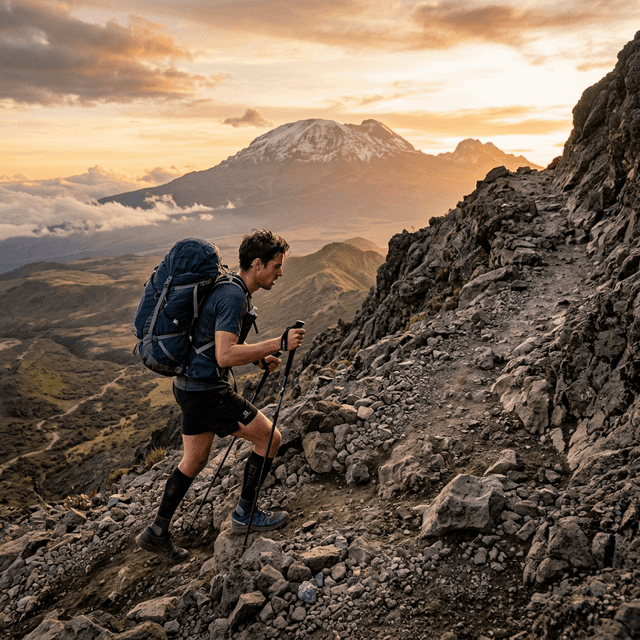
A successful summit of Uhuru Peak isn't just about physical strength—it's about building the specific endurance and mental resilience required to climb Mount Kilimanjaro. This 12-week training plan is your data-backed roadmap to peak performance at 5,895 meters.
The Science of Altitude Preparation
While you cannot fully simulate the 40% reduction in oxygen levels found at the summit of Kilimanjaro without being at altitude, you can train your body to be a more efficient oxygen processor. The "Entry Fee" for a safe climb isn't being an elite athlete; it's being a "durable" hiker. This means building muscular stamina that doesn't quit after 6 hours of uphill grinding.
The 4 Pillars of Kili Fitness
Aerobic Base
Low-intensity, long-duration cardio to train your body to process oxygen efficiently.
Leg Strength
Focus on eccentric loading (downhill training) to protect your knees on the 10,000ft descent.
Weighted Stamina
Gradually increasing your pack weight to simulate your daily 15-20lb daypack.
Mental Grit
Developing the psychological tools to handle discomfort and cold during the 12-hour summit night.
Phase 1: Foundation (Weeks 1-4)
In this phase, the goal is consistency. You are waking up dormant muscle groups and breaking in your hiking boots. Never underestimate the importance of foot health.
| Day | Primary Activity | Intensity/Duration |
|---|---|---|
| Mon/Wed | Light Cardio (Jogging at conversational pace or Swimming) | 30-45 mins (HR Zone 2) |
| Tue/Thu | Strength Training (Squats, Walking Lunges, Plank) | 3 sets of 15 / 45 sec planks |
| Saturday | Long Trail Walk (Local park or stairs) | 2-3 hours (No pack weight yet) |
| Sun/Fri | Active Recovery & Mobility Work | 20 mins Yoga / Foam Rolling |
Phase 2: The Incline Factor (Weeks 5-8)
This is where we build "Vertical Power." If you live in a flat city, the StairMaster is your best friend. Climbing Kilimanjaro isn't about miles; it's about vertical gain. You should now be training with your actual trekking daypack.
The StairMaster Secret
"Training on a StairMaster with your actual trekking boots and a 10lb pack is the single most effective way to prepare for the relentless steps of the Barranco Wall. Focus on steady, rhythmic stepping."
The Weight Progression
Increase your pack weight by 2-3 lbs each week during this phase. Aim to hit 15 lbs by week 8. This ensures your shoulders and lower back are conditioned for the summit night.
Phase 3: Peak Volume (Weeks 9-11)
Your "Big Training Days" happen now. You should be doing 5-6 hour hikes with a full 20lb pack on back-to-back days. This simulates the exhaustion of the later stages of routes like the 9-Day Northern Circuit.
Warning: The Taper (Week 12)
Do not train hard in the final 7 days before you depart. Your goal is to arrive in Tanzania with zero injuries and full glycogen stores. Light walking and stretching only.
The "Pole-Pole" Mindset
Remember that on the mountain, your lead guide will keep you at a Pole-Pole (Slowly, Slowly) pace. Your training isn't about speed; it's about heart rate discipline. If you can maintain a moderate heart rate while climbing a steep incline with weight, you have won 90% of the battle.
Are You Physically Ready?
Don't guess. Our Success Predictor algorithm analyzes your age, fitness history, and chosen route to give you a realistic probability of reaching Uhuru Peak.
Professional Training Guide Content © 2026 KiliGo Expedition Team